

Tambopata tours from Puerto Maldonado
Fly in from Cusco or Lima and you're in the rainforest by lunch.
What you can see in Tambopata
Photo credits
Photos: Fray Miguel Escobar, except
- Agouti: Annika Lindqvist, CC BY 4.0, Wikimedia Commons
- Proboscis bats: Charles J. Sharp, CC BY-SA 4.0, Wikimedia Commons
- Ocelot: Giles Laurent, CC BY-SA 4.0, Wikimedia Commons
- Sloth: Stefan Laube (Tauchgurke), Public domain, Wikimedia Commons
- Coati: Frederique, Burgers' Zoo, CC BY-SA 4.0, Wikimedia Commons
- Paca: Hans Hillewaert, CC BY-SA 3.0, Wikimedia Commons
- Tayra: Leslie, CC0, Wikimedia Commons
- Kinkajou: Melissa McMasters, CC BY 4.0, Wikimedia Commons
- Amazon bamboo rat: Asohn19262, CC BY-SA 3.0, Wikimedia Commons
- Night monkey: thibaudaronson, CC BY-SA 4.0, Wikimedia Commons
- Pygmy marmoset: H. Zell, CC BY-SA 3.0, Wikimedia Commons
- Mealy parrot: Andra Waagmeester, CC0, Wikimedia Commons
- Blue-headed parrot: Fernando Flores, CC BY-SA 2.0, Wikimedia Commons
- Cobalt-winged parakeet: Gary L. Clark, CC BY-SA 4.0, Wikimedia Commons
- Oropendola: Francesco Veronesi from Italy, CC BY-SA 2.0, Wikimedia Commons
- Yellow-rumped cacique: DiogoKanouté, CC BY-SA 4.0, Wikimedia Commons
- Blue-and-yellow macaw: Luc Viatour, CC BY 2.0, Wikimedia Commons
- Chestnut-fronted macaw: Félix Uribe, CC BY-SA 2.0, Wikimedia Commons
- Speckled chachalaca: Joao Quental, CC BY 2.0, Wikimedia Commons
- Blue-crowned trogon: Charles J. Sharp, CC BY-SA 4.0, Wikimedia Commons
- Black caracara: Charles J. Sharp, CC BY-SA 4.0, Wikimedia Commons
- Pauraque: Jairmoreirafotografia, CC BY-SA 4.0, Wikimedia Commons
- Capped heron: Bernard Dupont, CC BY-SA 2.0, Wikimedia Commons
- Screaming piha: Hector Bottai, CC BY-SA 4.0, Wikimedia Commons
- Tinamous: Josefito123, CC BY-SA 4.0, Wikimedia Commons
- Sunbittern: Félix Uribe, CC BY-SA 2.0, Wikimedia Commons
- Spectacled owl: Hans Hillewaert, CC BY-SA 3.0, Wikimedia Commons
- Piranha: H. Zell, CC BY-SA 3.0, Wikimedia Commons
- Leafcutter ants: Pjt56, CC BY-SA 4.0, Wikimedia Commons
- Blue morpho: Bernard Dupont, CC BY-SA 2.0, Wikimedia Commons
- Tarantula: DiverDave, CC BY-SA 3.0, Wikimedia Commons
- Tree frogs: dhfischer, CC BY 4.0, Wikimedia Commons
- Bullet ant: Bernard Dupont, CC BY-SA 2.0, Wikimedia Commons
- Anaconda: MKAMPIS, CC BY-SA 4.0, Wikimedia Commons
- Poison frog: Geoff Gallice from Gainesville, FL, USA, CC BY 2.0, Wikimedia Commons
- Green iguana: Kenneth Moore Photography, CC BY 2.0, Wikimedia Commons
- Leaf katydids: Jayendra Chiplunkar, CC BY-SA 3.0, Wikimedia Commons
- Kapok (lupuna): Matti Blume, CC BY-SA 4.0, Wikimedia Commons
- Strangler fig: CharlieTorr123, CC0, Wikimedia Commons
- Walking palm: Ragnhild & Neil Crawford, CC BY-SA 2.0, Wikimedia Commons
- Brazil nut tree: Vihelik, Public domain, Wikimedia Commons
- Bromeliads: KimonBerlin, CC BY-SA 2.0, Wikimedia Commons
- Heliconia: NorbertNagel, CC BY-SA 4.0, Wikimedia Commons
- Cecropia: Eurico Zimbres, Public domain, Wikimedia Commons
- Cat's claw: Kristi Denby, Centro Takiwasi, CC BY-SA 4.0, Wikimedia Commons
- Aguaje palm: Kristof Zyskowski & Yulia Bereshpolova, CC BY 2.0, Wikimedia Commons
- Orchids: Thomas Fuhrmann, CC BY-SA 4.0, Wikimedia Commons
- Ayahuasca vine: Terpsichore, CC BY-SA 3.0, Wikimedia Commons
- Jaguar (sound): About Zoos, CC BY 4.0, Wikimedia Commons
- Amazon bamboo rat (sound): Richard Ranft, British Library, CC BY 4.0, Wikimedia Commons
- Red howler monkey (sound): David O'Hara, CC BY 3.0, Wikimedia Commons
- Night monkey (sound): Richard Ranft, British Library, CC BY 4.0, Wikimedia Commons
- Scarlet macaw (sound): Ganesh Mohan T, CC BY-SA 4.0, Wikimedia Commons
- Mealy parrot (sound): Richard Ranft, British Library, CC BY 4.0, Wikimedia Commons
- Blue-headed parrot (sound): Niels Krabbe, CC BY-SA 4.0, Wikimedia Commons
- Cobalt-winged parakeet (sound): Niels Krabbe, CC BY-SA 4.0, Wikimedia Commons
- Hoatzin (sound): Niels Krabbe, CC BY-SA 4.0, Wikimedia Commons
- Oropendola (sound): Niels Krabbe, CC BY-SA 4.0, Wikimedia Commons
- Kingfisher (sound): Niels Krabbe, CC BY-SA 4.0, Wikimedia Commons
- Yellow-rumped cacique (sound): Niels Krabbe, CC BY-SA 4.0, Wikimedia Commons
- Chestnut-fronted macaw (sound): Oliver Komar, CC BY-SA 4.0, Wikimedia Commons
- Toucan (sound): Niels Krabbe, CC BY-SA 4.0, Wikimedia Commons
- Tanagers (sound): Niels Krabbe, CC BY-SA 4.0, Wikimedia Commons
- Speckled chachalaca (sound): Niels Krabbe, CC BY-SA 3.0, Wikimedia Commons
- Blue-crowned trogon (sound): Niels Krabbe, CC BY-SA 4.0, Wikimedia Commons
- Black caracara (sound): Niels Krabbe, CC BY-SA 4.0, Wikimedia Commons
- Pauraque (sound): Richard Ranft, British Library, CC BY 4.0, Wikimedia Commons
- Potoo (sound): Niels Krabbe, CC BY-SA 4.0, Wikimedia Commons
- Screaming piha (sound): Richard Ranft, British Library, CC BY 4.0, Wikimedia Commons
- Tinamous (sound): Niels Krabbe, CC BY-SA 3.0, Wikimedia Commons
- Sunbittern (sound): Niels Krabbe, CC BY-SA 4.0, Wikimedia Commons
- Spectacled owl (sound): Niels Krabbe, CC BY-SA 4.0, Wikimedia Commons
What is Tambopata?
The Tambopata National Reserve protects lowland Amazon rainforest along the Tambopata River, in the Madre de Dios region of south-east Peru, close to the town of Puerto Maldonado. Because Puerto Maldonado has an airport with flights from Cusco and Lima, Tambopata is the quickest way into the Peruvian Amazon.
The highlights
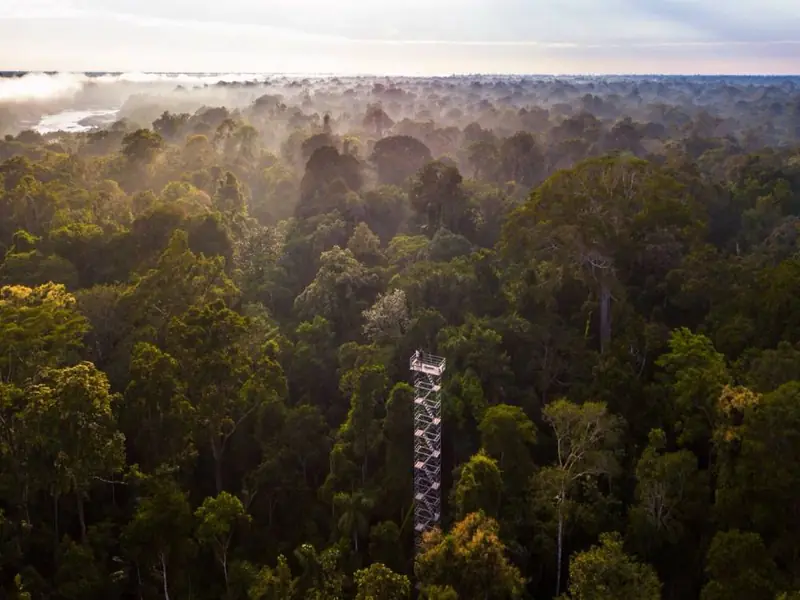
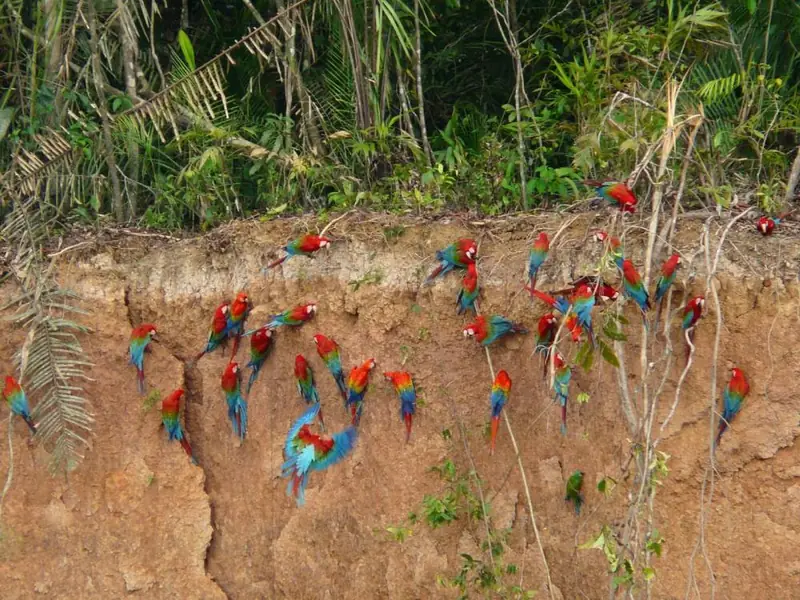
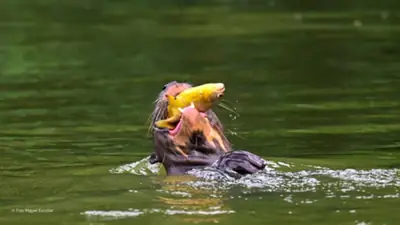
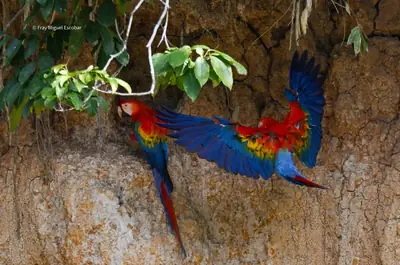
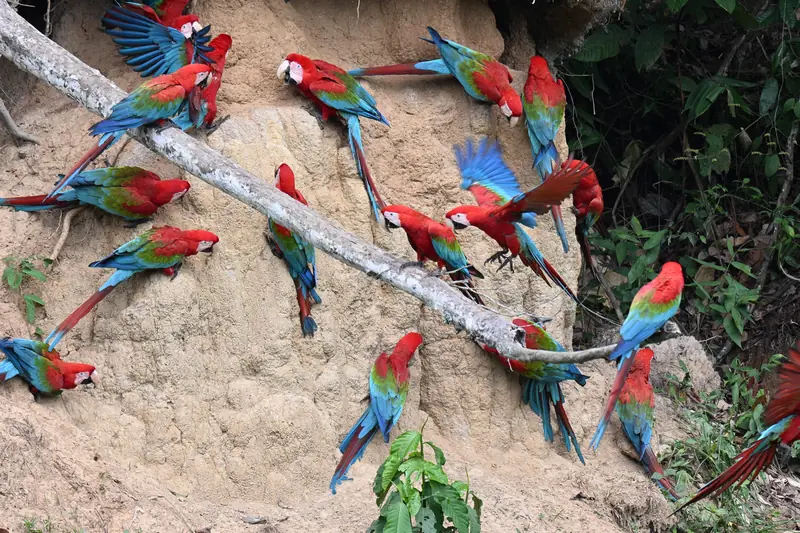
The Chuncho clay lick: at dawn, macaws and parrots fill the sky before landing on the clay. The canopy tower: climb above the trees for toucans, tanagers and sunrise over the forest. Tres Chimbadas lake: explore by catamaran for giant otters and hoatzins, and try piranha fishing. Three nights at Chuncho Lodge, with a pool and hammocks.
Tambopata or Manu?
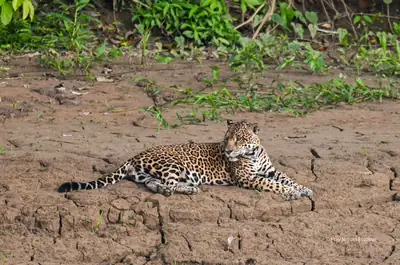
Tambopata is faster and more comfortable to reach. Manu is wilder, crosses the Andes and cloud forest, and its Reserved Zone is one of the best places in the Amazon for giant otters and jaguars. Read our Manu vs Tambopata guide, see our Manu tours, or do both on the 9-day trip.
Tambopata questions
How do I get to Tambopata?
Fly to Puerto Maldonado from Cusco (about an hour) or Lima. We pick you up at the airport, the bus terminal or your hotel.
How many days do I need?
Four days is right: the Chuncho clay lick at dawn, the canopy tower and a lake by catamaran, without rushing.
What is the Chuncho clay lick?
A riverbank of mineral-rich clay on the Tambopata River where hundreds of parrots and macaws gather in the morning: scarlet, red-and-green and blue-and-yellow macaws.
Can I combine Tambopata with Manu?
Yes. Our 9-day Manu and Tambopata tour starts in Cusco, crosses Manu's Reserved Zone and ends in Puerto Maldonado.