

Manu National Park tours from Cusco
The wildest corner of the Peruvian Amazon, reached by road from Cusco.
 Daily departures3days
Manu Cultural Zone
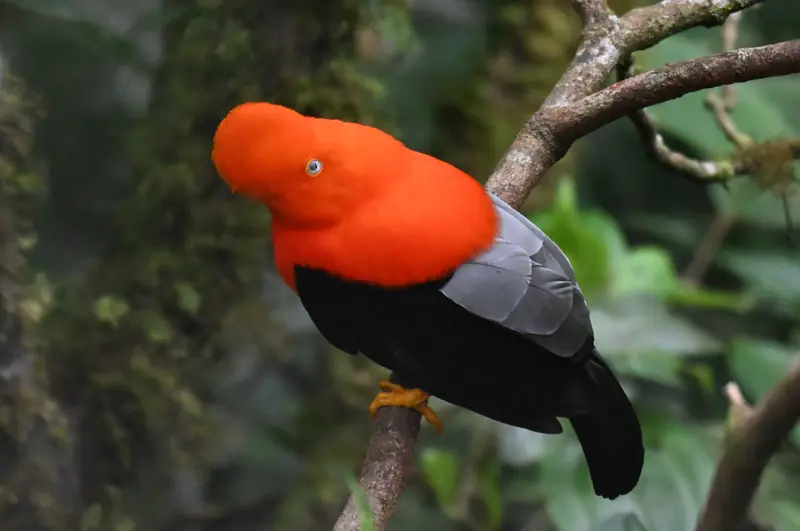
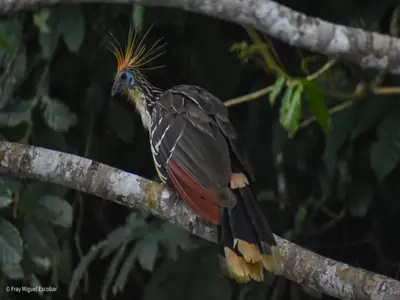
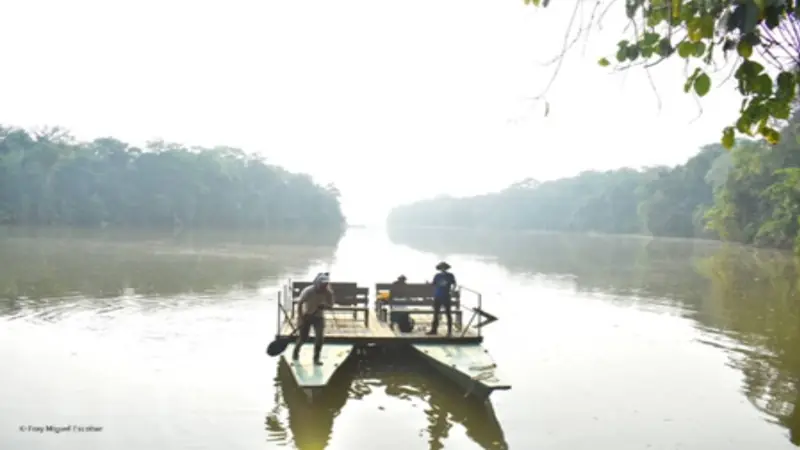
Andes to jungle in three days: cloud forest, a raft on Machuwasi lagoon, parrots at dawn.
 from $275
 5days
Manu National Park
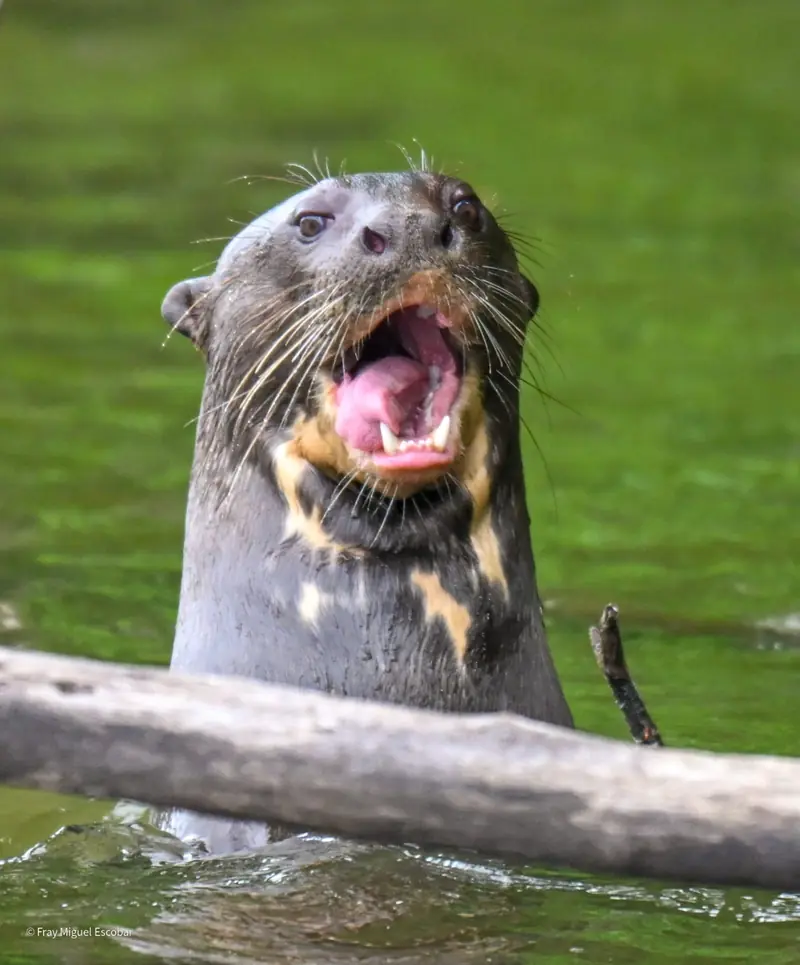
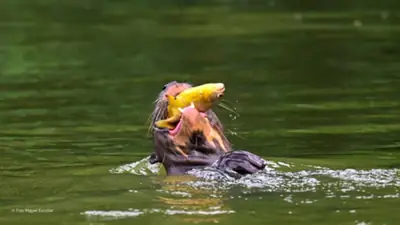
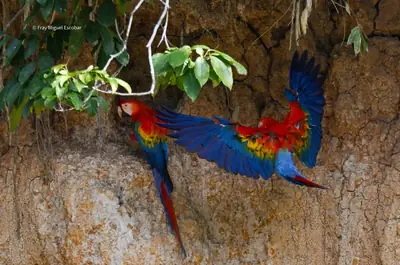
The Reserved Zone at a photographer's pace: otters, macaws, a night at the tapir lick.
 from $950
 Most booked6days
Manu National Park
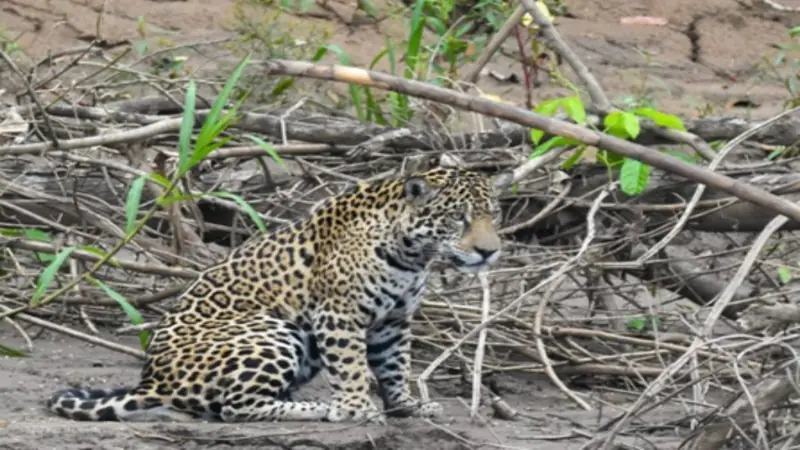
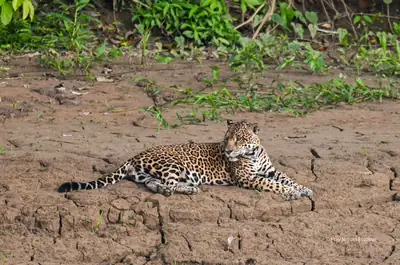
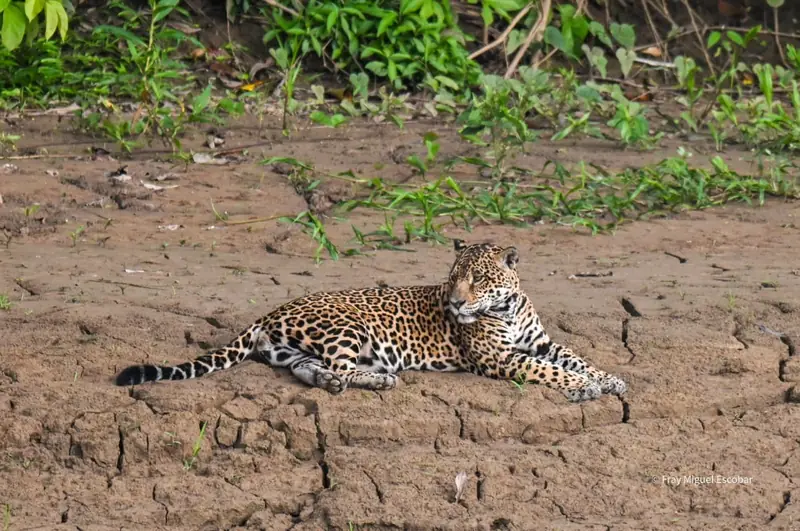
Our most booked trip: deep into the Reserved Zone, with the best odds for jaguars and otters.
from $1,000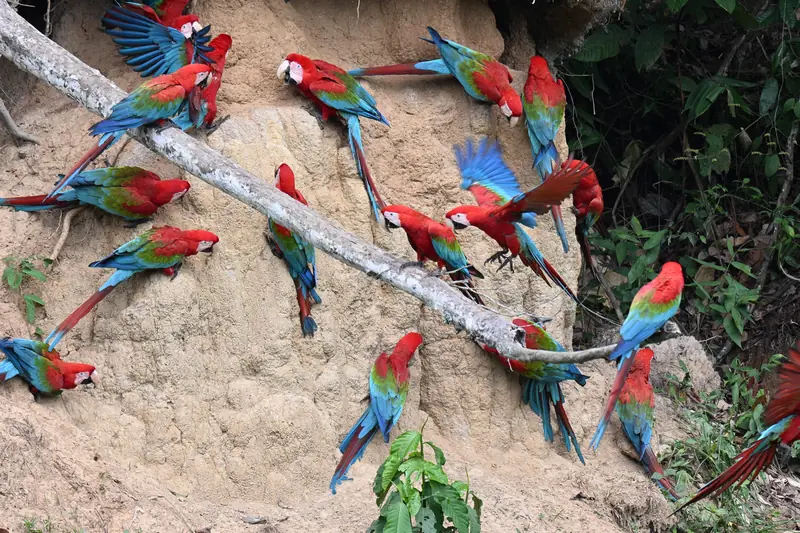 9days
Manu + Tambopata
Every altitude from the Andes to the lowlands, two macaw clay licks, then fly home.
from $2,690From the Andes to the Amazon in one day
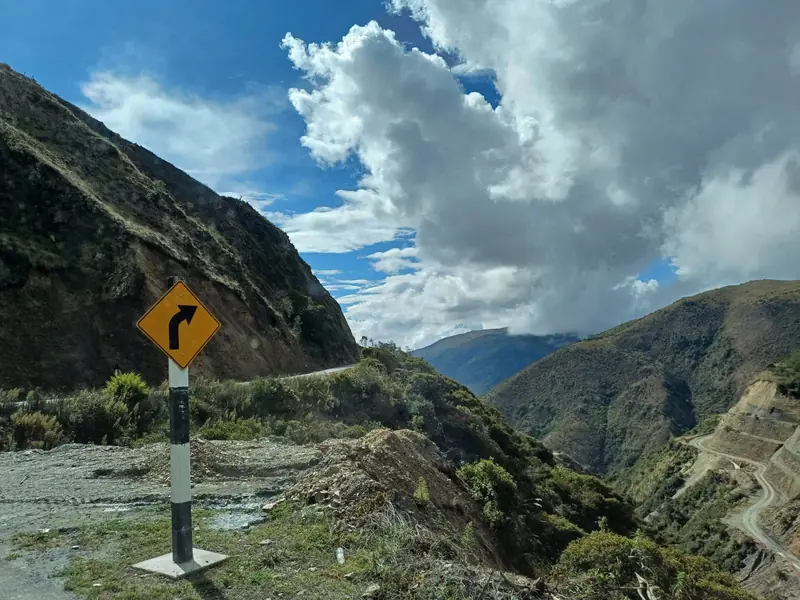
The road drops 3,000 metres. The animals change on the way down.
Two zones, two kinds of trip
What you can see in Manu
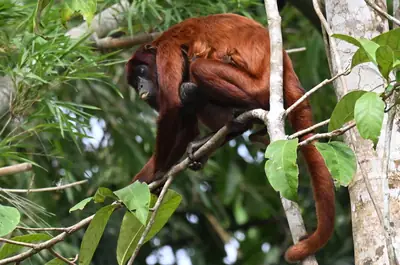
Manu alone has 1,005 bird species, 222 mammals and 14 kinds of monkey. These are the ones guests ask about.*
Photo credits
Photos: Fray Miguel Escobar, except
- Tapir: Charles J. Sharp, CC BY-SA 4.0, Wikimedia Commons
- Spectacled bear: Wilfredor, CC0, Wikimedia Commons
- Giant anteater: Malene Thyssen, CC BY-SA 3.0, Wikimedia Commons
- Ocelot: Giles Laurent, CC BY-SA 4.0, Wikimedia Commons
- White-lipped peccary: Charles J. Sharp, CC BY-SA 4.0, Wikimedia Commons
- Sloth: Stefan Laube (Tauchgurke), Public domain, Wikimedia Commons
- Puma: Charles J. Sharp, CC BY-SA 4.0, Wikimedia Commons
- Coati: Frederique, Burgers' Zoo, CC BY-SA 4.0, Wikimedia Commons
- Agouti: Annika Lindqvist, CC BY 4.0, Wikimedia Commons
- Paca: Hans Hillewaert, CC BY-SA 3.0, Wikimedia Commons
- Tayra: Leslie, CC0, Wikimedia Commons
- Kinkajou: Melissa McMasters, CC BY 4.0, Wikimedia Commons
- Amazon bamboo rat: Asohn19262, CC BY-SA 3.0, Wikimedia Commons
- Proboscis bats: Charles J. Sharp, CC BY-SA 4.0, Wikimedia Commons
- Spider monkey: Miguelrangeljr, CC BY-SA 3.0, Wikimedia Commons
- Emperor tamarin: Brocken Inaglory, CC BY-SA 3.0, Wikimedia Commons
- Saddleback tamarin: Giovanni Mari, CC BY-SA 2.0, Wikimedia Commons
- Titi monkey: Cliff, CC BY 2.0, Wikimedia Commons
- Night monkey: thibaudaronson, CC BY-SA 4.0, Wikimedia Commons
- Pygmy marmoset: H. Zell, CC BY-SA 3.0, Wikimedia Commons
- Blue-and-yellow macaw: Luc Viatour, CC BY 2.0, Wikimedia Commons
- Chestnut-fronted macaw: Félix Uribe, CC BY-SA 2.0, Wikimedia Commons
- Mealy parrot: Andra Waagmeester, CC0, Wikimedia Commons
- Blue-headed parrot: Fernando Flores, CC BY-SA 2.0, Wikimedia Commons
- Cobalt-winged parakeet: Gary L. Clark, CC BY-SA 4.0, Wikimedia Commons
- Golden-headed quetzal: chdwckvnstrsslhm (Flickr), CC BY 2.0, Wikimedia Commons
- Oropendola: Francesco Veronesi from Italy, CC BY-SA 2.0, Wikimedia Commons
- Horned screamer: Bill Bouton from San Luis Obispo, CA, USA, CC BY-SA 2.0, Wikimedia Commons
- Screaming piha: Hector Bottai, CC BY-SA 4.0, Wikimedia Commons
- Tinamous: Josefito123, CC BY-SA 4.0, Wikimedia Commons
- Speckled chachalaca: Joao Quental, CC BY 2.0, Wikimedia Commons
- Sunbittern: Félix Uribe, CC BY-SA 2.0, Wikimedia Commons
- Amazonian umbrellabird: Hector Bottai, CC BY-SA 4.0, Wikimedia Commons
- Blue-crowned trogon: Charles J. Sharp, CC BY-SA 4.0, Wikimedia Commons
- Black caracara: Charles J. Sharp, CC BY-SA 4.0, Wikimedia Commons
- Spectacled owl: Hans Hillewaert, CC BY-SA 3.0, Wikimedia Commons
- Pauraque: Jairmoreirafotografia, CC BY-SA 4.0, Wikimedia Commons
- Yellow-rumped cacique: DiogoKanouté, CC BY-SA 4.0, Wikimedia Commons
- Capped heron: Bernard Dupont, CC BY-SA 2.0, Wikimedia Commons
- Black skimmer: Fernando Pizarro C, CC BY-SA 4.0, Wikimedia Commons
- Jabiru: Giles Laurent, CC BY-SA 4.0, Wikimedia Commons
- Anaconda: MKAMPIS, CC BY-SA 4.0, Wikimedia Commons
- Poison frog: Geoff Gallice from Gainesville, FL, USA, CC BY 2.0, Wikimedia Commons
- Leafcutter ants: Pjt56, CC BY-SA 4.0, Wikimedia Commons
- Blue morpho: Bernard Dupont, CC BY-SA 2.0, Wikimedia Commons
- Tarantula: DiverDave, CC BY-SA 3.0, Wikimedia Commons
- Tree frogs: dhfischer, CC BY 4.0, Wikimedia Commons
- Glass frog: Santiago Ron, CC BY 2.0, Wikimedia Commons
- Bullet ant: Bernard Dupont, CC BY-SA 2.0, Wikimedia Commons
- Green iguana: Kenneth Moore Photography, CC BY 2.0, Wikimedia Commons
- Leaf katydids: Jayendra Chiplunkar, CC BY-SA 3.0, Wikimedia Commons
- Kapok (lupuna): Matti Blume, CC BY-SA 4.0, Wikimedia Commons
- Strangler fig: CharlieTorr123, CC0, Wikimedia Commons
- Walking palm: Ragnhild & Neil Crawford, CC BY-SA 2.0, Wikimedia Commons
- Orchids: Thomas Fuhrmann, CC BY-SA 4.0, Wikimedia Commons
- Bromeliads: KimonBerlin, CC BY-SA 2.0, Wikimedia Commons
- Heliconia: NorbertNagel, CC BY-SA 4.0, Wikimedia Commons
- Cecropia: Eurico Zimbres, Public domain, Wikimedia Commons
- Cat's claw: Kristi Denby, Centro Takiwasi, CC BY-SA 4.0, Wikimedia Commons
- Ayahuasca vine: Terpsichore, CC BY-SA 3.0, Wikimedia Commons
- Aguaje palm: Kristof Zyskowski & Yulia Bereshpolova, CC BY 2.0, Wikimedia Commons
- Jaguar (sound): About Zoos, CC BY 4.0, Wikimedia Commons
- Amazon bamboo rat (sound): Richard Ranft, British Library, CC BY 4.0, Wikimedia Commons
- Red howler monkey (sound): David O'Hara, CC BY 3.0, Wikimedia Commons
- Woolly monkey (sound): Kai Medina (Mk170101), CC BY-SA 4.0, Wikimedia Commons
- Night monkey (sound): Richard Ranft, British Library, CC BY 4.0, Wikimedia Commons
- Scarlet macaw (sound): Ganesh Mohan T, CC BY-SA 4.0, Wikimedia Commons
- Chestnut-fronted macaw (sound): Oliver Komar, CC BY-SA 4.0, Wikimedia Commons
- Mealy parrot (sound): Richard Ranft, British Library, CC BY 4.0, Wikimedia Commons
- Blue-headed parrot (sound): Niels Krabbe, CC BY-SA 4.0, Wikimedia Commons
- Cobalt-winged parakeet (sound): Niels Krabbe, CC BY-SA 4.0, Wikimedia Commons
- Cock-of-the-rock (sound): Niels Krabbe, CC BY-SA 4.0, Wikimedia Commons
- Hummingbirds (sound): Niels Krabbe, CC BY-SA 4.0, Wikimedia Commons
- Toucan (sound): Niels Krabbe, CC BY-SA 4.0, Wikimedia Commons
- Hoatzin (sound): Niels Krabbe, CC BY-SA 4.0, Wikimedia Commons
- Potoo (sound): Niels Krabbe, CC BY-SA 4.0, Wikimedia Commons
- Golden-headed quetzal (sound): Niels Krabbe, CC BY-SA 4.0, Wikimedia Commons
- Oropendola (sound): Niels Krabbe, CC BY-SA 4.0, Wikimedia Commons
- Kingfisher (sound): Niels Krabbe, CC BY-SA 4.0, Wikimedia Commons
- Tanagers (sound): Niels Krabbe, CC BY-SA 4.0, Wikimedia Commons
- Horned screamer (sound): Djino, Public domain, Wikimedia Commons
- Screaming piha (sound): Richard Ranft, British Library, CC BY 4.0, Wikimedia Commons
- Tinamous (sound): Niels Krabbe, CC BY-SA 3.0, Wikimedia Commons
- Speckled chachalaca (sound): Niels Krabbe, CC BY-SA 3.0, Wikimedia Commons
- Sunbittern (sound): Niels Krabbe, CC BY-SA 4.0, Wikimedia Commons
- Amazonian umbrellabird (sound): Niels Krabbe, CC BY-SA 4.0, Wikimedia Commons
- Blue-crowned trogon (sound): Niels Krabbe, CC BY-SA 4.0, Wikimedia Commons
- Black caracara (sound): Niels Krabbe, CC BY-SA 4.0, Wikimedia Commons
- Spectacled owl (sound): Niels Krabbe, CC BY-SA 4.0, Wikimedia Commons
- Pauraque (sound): Richard Ranft, British Library, CC BY 4.0, Wikimedia Commons
- Yellow-rumped cacique (sound): Niels Krabbe, CC BY-SA 4.0, Wikimedia Commons
When to go
What is Manu National Park?
Manu protects an entire watershed, from Andean grassland above 3,500 metres down to the lowland Amazon at about 300. That range of altitudes is why it holds so much life: over 1,000 bird species recorded in the Manu area, giant otters, jaguars, tapirs, more than a dozen monkey species and thousands of plants. It is a UNESCO World Heritage Site and Biosphere Reserve. Most of the park is closed to visitors to protect the forest and the indigenous communities who live there, which is exactly why the parts you can visit are so wild.
Cultural Zone or Reserved Zone?
The Cultural Zone is the accessible area along the road from Cusco and the Alto Madre de Dios River: the Acjanaco pass, the cloud forest, Pilcopata and the lodges near Atalaya. Our 3-day tour stays here. The Reserved Zone starts at the Limonal ranger station on the Manu River; beyond it lie about five hours of river. Entry needs park permits and an authorised operator. Here are Cocha Salvador and Cocha Otorongo, oxbow lakes with families of giant otters, and the river beaches where jaguars rest in the dry season. Our 5-day, 6-day and 9-day tours go in.
How many days do you need in Manu?
Three days for the cloud forest, the cock-of-the-rock, Machuwasi lagoon and a parrot clay lick. Five or six days to add the Reserved Zone: the Manu River, Cocha Salvador, the macaw clay lick and a night at the tapir clay lick. This is the trip we recommend. Nine days to add Tambopata's Chuncho clay lick and finish in Puerto Maldonado with a flight back.
Best time to visit Manu
May to October, the dry season, is best: rivers are lower, beaches appear along the Manu River and animals gather near the water. July to October is excellent for jaguars and caimans on the beaches. November to April brings rain, higher rivers, a greener forest and fewer travellers. Trips still run; send us your dates and we'll tell you what to expect.
How to get from Cusco to Manu
By road, and the journey is part of the trip. Day one leaves Cusco at about 4:30 am, crosses the Andes, stops for breakfast in colonial Paucartambo and enters the park at the Acjanaco pass. The road then drops through the cloud forest, with stops for birds and monkeys, to the first lodge at about 5 pm. From Atalaya port you travel by boat. All transport is included.
Where you stay
Established jungle lodges chosen for location and wildlife: Bambu Lodge at the foot of the cloud forest, Hummingbird Lodge on the Alto Madre de Dios, community-run Casa Matsiguenka Lodge inside the Reserved Zone near Cocha Salvador, and Manu Birding Lodge on the 9-day route. On the 5 and 6 day trips you also spend a night in a forest hide at the tapir clay lick. Simple, clean, and in the right places.
How much does a Manu tour cost?
From $275 per person for 3 days in the Cultural Zone, $950 for 5 days, $1,000 for 6 days in the Reserved Zone and $2,690 for 9 days with Tambopata. Lodges, meals, transport, guide and park fees are included. The price depends on days, group size and whether you want a private departure.
Manu tour questions
Can I visit Manu without a tour?
Not the Reserved Zone: it needs park permits and an authorised operator. The road and the Cultural Zone can be reached independently, but transport, lodges and guiding are hard to arrange on your own.
How far is Manu from Cusco?
A full day on the road: we leave Cusco at about 4:30 am and reach the first lodge at about 5 pm, with stops in Paucartambo and the cloud forest. From there you travel by boat.
Is Manu safe?
Yes, with an experienced operator. Our guides carry first-aid kits and radios, and we use established lodges. See a travel clinic about vaccinations, especially yellow fever, before visiting the Madre de Dios region.
What should I pack?
Long-sleeved shirts and long trousers, a rain jacket, insect repellent, hiking shoes and sandals, a swimsuit, a torch, binoculars and your original passport. We lend rubber boots and rain ponchos.
Is Manu good for children?
The 3-day Cultural Zone trip works well for families who travel comfortably by road. The Reserved Zone trips have long boat days that suit older children who love animals.